Infiniti Q50 - 2016

The new 2016 Infiniti Q50 sports sedan is being launched with a number of performance and dynamic upgrades that deliver a more empowering

2017 Volvo S90

Volvo Cars debuted the highly-anticipated Volvo S90 luxury sedan in Gothenburg, Sweden on the heels of the company's award-winning Volvo XC90 SUV.

2016 Renault Megane

The dynamic-looking, high-quality, All-New Renault Megane - loaded with technology features from higher

Infiniti QX60 - 2016

Infiniti has comprehensively enhanced its versatile QX60 premium crossover for 2016,

Mercedes-Benz SLC43 AMG - 2017

There need be no contradiction between high driving dynamics and low fuel consumption. This is proved by the new Mercedes-AMG SLC43

Showing posts with label BMW. Show all posts

Wednesday, April 20, 2016

2016 BMW M4 GTS


BMW M4 GTS

The BMW M4 GTS gives BMW M GmbH a new and exclusive technological showpiece which elevates the potential of the BMW M4 Coupe to another impressive new level. With its powerful, motor sport-inspired looks and highperformance technology, the BMW M4 GTS has its sights set squarely on the race track. A lap time of 7.28 minutes around the legendary Nürburgring- Nordschleife, the world's most exacting race circuit, is a clear statement of this special-edition model's exceptional abilities. At the same time, the sharpest BMW M4 of all - like its BMW M stablemates - can also hold its own on public roads. BMW M GmbH is launching the BMW M4 GTS in a special edition limited to 700 units to celebrate the 30th anniversary of the BMW M3, which has been in production since 1986. In so doing, it is highlighting the innovative flair of the BMW M engineers in developing trailblazing M technologies on the powertrain, chassis and lightweight construction front. The first highperformance special edition in the M3/M4 model range will also be available for the first time in the important North American market.


"Special-edition models like the BMW M3 GT, BMW M3 CSL, BMW M3 GTS and BMW M3 CRT have a decades-long tradition in our mid-size line-up - and that continues with the BMW M4," says Frank van Meel, CEO of BMW M GmbH. "They sharpen the character of the BMW M brand and embody an emotionally rich and exclusive driving experience. We've taken a radical route with the set-up of the BMW M4 GTS to create a sports machine for the race track that delivers top-end dynamics and inspirational performance. It allows us to demonstrate what is possible today with a road-legal car. Owners can drive their BMW M4 GTS to circuits such as Spa-Francorchamps, the Nürburgring or Laguna Seca - for clubsport events, for example - and then set lap times there that raise the bar to extremely high levels for road-legal cars."


BMW M4 GTS (2016)

2016 BMW M4 GTS

Performance boost courtesy of innovative water injection


At the heart of each and every BMW M model is its engine. The BMW M4 GTS uses the multi-award-winning six-cylinder in-line turbo engine from the BMW M3/M4, but adds innovative water injection technology to give the 3.0-litre unit a substantial power boost. The water injection system raises the engine's output significantly - to 368 kW/500 hp - and increases torque to 600 Nm (442 lb-ft), yet still keeps fuel economy and CO2 emissions at the level of the BMW M4 Coupe (8.3 litres per 100 km [34 mpg imp], 194 g/km). This makes the BMW M4 GTS the most agile, radical and dynamically potent model in the range. It races from a standstill to 100 km/h (62 mph) in a mere 3.8 seconds and hits a limited top speed of 305 km/h (189.5 mph).


Lightweight design extends into the details


Intelligent lightweight construction allows the BMW M engineers to limit the car's DIN kerb weight to 1,510 kilograms (ECE kerb weight: 1,585 kg). Its outstanding weight-to-power ratio of 3.0 kg/hp provides the perfect platform for a highly dynamic driving experience. The rigorous weight-saving measures extend through both the interior and exterior of the car. Inside, carbon-fibre bucket seats, a lightweight centre console, the lightweight construction of the rear seat panelling and boot area partition, and special lightweight door and side panel trim, including door pull loops in place of solid door handles, are clearly visible indications of the designers' commitment to weight-saving. The rigorous application of lightweight design can also be seen in details that are out of view. The instrument panel bracing tube is made from lightweight carbon fibre. And on the outside of the car, the newly designed bonnet, roof and adjustable front splitter are also constructed from carbon-fibre-reinforced plastic (CFRP). The adjustable rear wing, too, is cut from this light but extremely durable high-tech material. It rests on intricate, CNC-machined aluminium mounts fixed to the CFRP boot lid which likewise demonstrate how every detail, no matter how small, has been honed to minimise weight. Teaming up with the diffuser - again, made from carbon fibre - below the rear bumper, the rear wing optimises the flow of air and reduces lift at the rear axle. The exhaust system has a titanium muffler, which allows a weight saving of 20 per cent. Its emotionally rich soundtrack fits the M profile perfectly and envelops the inside and outside of the car in the ambience of the race track.


Performance-maximising equipment features


The standard-fitted seven-speed M Double Clutch Transmission (M DCT) selects the optimum ratio for every driving situation with no interruption in the flow of power as it makes its way to the rear wheels. The driver can also select gears manually using either shift paddles on the steering wheel or the selector lever. The Drivelogic shift programs and Launch Control have been retuned to the engine's increased output. The weight-minimised, exclusive M light-alloy wheels in star-spoke 666 M Styling are forged and polished, and come in Acid Orange. They are fitted with Michelin Pilot Sport Cup 2 tyres (front: 265/35 R19, rear: 285/30 R20) which are adapted specifically to the BMW M4 GTS and therefore play a role in the car's outstanding mechanical traction and feedback through corners.


The three-way M coilover suspension specially tuned for the BMW M4 GTS can be adjusted to individual tastes and therefore also to the demands of different race circuits. The lightweight M carbon ceramic brakes offer a welldefined pressure point and ensure outstanding deceleration even under sustained heavy loads, such as at the limit on the race track.


World-exclusive OLED technology, brilliant LED light


The familiar two sets of twin circular headlights with four corona rings ensure the best possible illumination of the road surface. They combine cutting-edge LED (light-emitting diode) technology with BMW Selective Beam (dazzle-free high beam assistant) and Adaptive Headlights.


The L-shaped rear lights are just as distinctive as the design of the headlights. Indeed, innovative OLED rear lights will make their series-production debut in the BMW M4 GTS. OLEDs (organic light-emitting diodes) are a new kind of light source that light up over their full surface with a very homogeneous effect - unlike LED units, which emit their light in the form of points. The flat design of OLEDs (they measure just 1.4 millimetres in height) and the ability to trigger individual light modules separately open up fresh possibilities for lighting concepts and exudes the presence of exceptional precision. As such, the tail lights underline the width of the rear end, lend the car an even more eye-catching and powerful appearance and ensure it cuts a stand-out figure in both the light and dark.


The interior - focused, exclusive and committed to motor sport


The carbon-fibre M bucket seats for the driver and passenger stick firmly with the lightweight construction theme inside the pure-bred, exclusive interior. They weigh around 50 per cent less than the sports seats in the BMW M4 Coupe, enable an ideal seating position and offer compelling longdistance comfort to go with their unbeatable levels of support. The exclusive Alcantara/Merino leather seat covering along with M stripes in the backrests, three-point seat belts and door pull loops highlight the profile of the BMW M4 GTS as a high-performance sports machine as well as the car's standalone character. The M4 GTS is fitted with different bucket-style M sports seats (including lightweight backrests with cut-outs) for the North American market, in line with local registration requirements.


The exclusive material Alcantara is also used for the M sports steering wheel, whose "12 o'clock" marker underlines the racing character of the BMW M4 GTS. In place of a rear seat bench, the BMW M4 GTS features a glass-fibre-reinforced plastic (GFRP) shelf and a rear panel in carbon-fibre sandwich construction. Both are covered in Alcantara, and together they enable a weight saving of around 40 per cent.


The optional Clubsport Package can further enhance the affinity of the BMW M4 GTS with the race track. It includes a roll bar in Acid Orange behind the front seats, a race-specification six-point harness and a fire extinguisher.


Intelligent lightweight design across the board


Intelligent lightweight engineering, already a vital consideration for the BMW M4, has been taken to new and even more uncompromising levels on the BMW M4 GTS. The goal was to minimise kerb weight in order to give the new model outstanding driving dynamics, top-class agility and highest efficiency. Rigorous lightweighting extends to even the smallest details of the BMW M4 GTS, delivering a DIN kerb weight of 1,510 kilograms (ECE kerb weight: 1,585 kg).


The low weight of the BMW M4 GTS improves not only performance but also dynamics and handling. Drivers perceive the benefits in the form of even more responsive steering, more precise cornering, shorter stopping distances and new levels of control when pushing the vehicle to its limits.


High-tech carbon construction reduces weight


Like the BMW M4 Coupe, the BMW M4 GTS has a carbon-fibre-reinforced plastic (CFRP) roof that is more than six kilograms lighter than a corresponding metal roof. Lightweight, robust CFRP is also used for the bonnet, which is approximately 25 per cent lighter than the aluminium bonnet of the BMW M4. Both these lightweight components play an important role in lowering the centre of gravity and further improving axle load distribution. In the BMW M4 GTS, BMW reaps the benefits of its many years' experience in high-tech carbon construction. The use of CFRP continues under the skin as well, for example in components such as the instrument panel support.


The contoured roof line with the typical centre channel carries over into the boot lid, emphasising the very sporty personality of the BMW M4 GTS. The geometry of the boot lid, which is made of CFRP and plastic, is precisely designed to optimise the rear aerodynamics and to help direct air to the lightweight CFRP rear spoiler. The spoiler is attached to the boot lid by two CNC-milled aluminium supports, each consisting of an intricate strut arrangement that optimally combines high stiffness with very low weight.


Lightweight exposed carbon fibre is also on display in the adjustable splitter underneath the BMW M4 GTS's front apron and in the rear apron diffuser. Exterior lightweight design measures continue with the exclusive forged, machine-polished, low-weight 666 M star-spoke wheels in Acid Orange and the M carbon ceramic brakes, both of which not only cut down on overall weight but also significantly reduce unsprung masses. The M engineers have also extended their uncompromising focus on lightweight engineering to the sports exhaust system, which features a titanium rear silencer. This high-end material combines light weight with robustness. The BMW M4 GTS's sports exhaust system produces an authentic racing sound and is 20 per cent lighter than a stainless steel component.


Extensive lightweighting continues under the skin


Needless to say, lightweight engineering is not just confined to the visible areas of the body. For example, the BMW M4 GTS's single-piece propeller shaft is made of carbon-fibre-reinforced plastic (CFRP), which is even lighter than the corresponding component in the BMW M3/M4. The low mass and high stiffness of the CFRP tube means that the propeller shaft can be produced as a single-piece component, without a centre bearing. This achieves weight savings of 40 per cent over a conventional component, with a simultaneous reduction in rotating masses. This in turn results in improved powertrain dynamics and better response.


All weight-saving measures are designed with an eye to improved driving dynamics. A good example is the CFRP strut brace in the engine compartment. Weighing only 1.5 kilograms, it offers superior stiffness to a comparable aluminium component. At the same time it plays a key part in ensuring eager turn-in and excellent steering precision.


Authentic racing feel in the interior


The many lightweight features in the interior of the BMW M4 GTS don't just save weight, they also exude an authentic racing feel. The most conspicuous example are the special M bucket seats. The all-carbon seat bucket is very strong and also approximately 50 per cent lighter than the standard BMW M4 sport seat. In between the seats, the BMW M4 GTS boasts a new, asymmetrically styled lightweight centre console that shaves around 30 per cent off the weight of the corresponding component in the BMW M4 Coupe.


A further weight-saving measure is the deletion of the rear seats. This area is now trimmed in glass-fibre-reinforced plastic (GFRP), with a carbon sandwich bulkhead to the rear. Both these elements are designed for reduced weight, a lower centre of gravity and maximum stiffness. The across-the-board lightweight engineering approach also extends to the door panel trim and rear side panel trim with modified design geometry and special lightweight construction based on renewable natural materials. Conventional door handles are replaced by door pull loops, while Alcantara trim makes an appearance only on the armrests. The weight of the door panel trim has been halved compared with comparable standard components.


Performance-enhanced version of the six-cylinder in-line engine


The BMW M4 GTS is powered by an M TwinPower Turbo engine capable of 7,600 rpm. Unusually high-revving for a turbocharged engine, it offers linear power delivery over a wide engine speed range. An innovative water injection system takes this six-cylinder in-line turbocharged unit to new performance heights by relaxing the thermal constraints on power and torque. The system has already proved itself on race tracks around the world on board the BMW M4 MotoGP Safety Car, the 2015's lead safety car in the world's top motorcycle racing series.


The engine develops its maximum power of 368 kW (500 hp) - an increase of 16 per cent over the BMW M4 - at 6,250 rpm. Peak torque has been increased by 10 per cent to 600 Newton metres (442 lb-ft), and is maintained over a very wide rev band (4,000 rpm to 5,500 rpm). The standard sprint from zero to 100 km/h (62 mph) takes 3.8 seconds, on the way to a governed top speed of 305 km/h (189.5 mph). Despite the significant extra power, the engine also excels on fuel efficiency, matching the BMW M4 Coupe's low EU combined fuel consumption of 8.3 litres/100 km (34 mpg imp), which corresponds to combined CO2 emissions of 194 g/km, and complying with the EU6 emissions standard.


Innovative water injection system


The BMW M4 GTS is the first production road car to be fitted with an innovative and trailblazing water injection system. With this system, which further improves the full-throttle power and fuel consumption of the turbocharged straight-six engine, the BMW M engineers have utilised the principle that water absorbs energy from the surrounding air when it evaporates. Water is injected as a fine spray into the intake manifold plenum chamber where it evaporates, significantly lowering the temperature of the intake air. This reduces the final compression temperature in the combustion chamber, which also reduces the risk of knock, allowing the turbocharged engine to operate with higher boost pressure and earlier spark timing. The result is increased power and torque, and a substantial improvement in efficiency. Despite the extra power output, thermal stress on all performancerelated components is reduced. All of these features ultimately help to diminish wear and prolong engine life.


Increased power, reduced full-throttle fuel consumption


The benefits of water injection can be utilised in various ways, depending on engine and vehicle type. In particular the engineers have considerable latitude when deciding how to balance their priorities between increased power and fuel efficiency. If water injection is taken into account in the design of a highperformance engine right from the start, it is possible to use turbochargers with a higher boost ratio and compression ratio. If the turbocharger produces peak power at peak rpm, it is possible to increase engine power by approximately eight per cent. At the same time, power losses due to an increase in ambient temperature (> 20° C) can be compensated by increasing the amount of water injected.


Technical background


The output of an internal combustion engine is physically limited not least by the operating temperature in the combustion chamber. If a given operating temperature is exceeded, this will result in uncontrolled combustion (knock), leading to power losses and, in the worst case, to severe engine damage. This is particularly relevant in the case of turbocharged engines, where the intake air is heated in the turbocharger compressor to as much as 160° C. Although intercooling can be used to cool the boost air, the capacity of intercooling systems is physically limited. Depending on the design and size of the system, and the aerodynamics of the vehicle, it is possible to cool the intake air to a temperature below 70° C before it enters the plenum chamber. To raise engine power by increasing boost pressure is not an option as it would mean exceeding the knock threshold.


This is where the BMW M division's solution comes in: if water is injected in a fine spray into the intake plenum chamber, it is possible to reduce the temperature of the intake air by around 25° C. This further cooling of the boost air makes it possible to advance the spark timing closer to the optimal value. This results in a more efficient combustion process, while at the same time reducing the final combustion temperature. At the same time cool air is more dense, which increases the proportion of oxygen in the combustion mixture and results in a higher mean combustion pressure, leading to optimised power and torque development. Finally, this efficient in-cylinder cooling system also reduces the thermal stress on a range of basic components including not only the pistons, exhaust valves and catalytic converter but also, due to the lower exhaust gas temperatures, the turbocharger.


Water injection raises the knock threshold


Using water injection to raise the knock threshold also goes a long way towards resolving a fundamental conflict in the design of high-performance engines, caused by the fact that power output and fuel consumption are closely dependent on compression ratio. This is particularly true in the case of highly turbocharged engines like the M TwinPower Turbo six-cylinder in-line engine. Here, a high compression ratio provides high efficiency and low fuel consumption at low and medium throttle. In the full-throttle range, however, the compression ratio is limited by the knock threshold. Water injection provides a particularly effective way of raising the knock threshold in this range, allowing the compression ratio to be increased. This makes it possible to optimise the power output of the turbocharged engine over a wide operating range. The lower the octane rating of the fuel, the greater the potential of this technology.


In terms of practical implementation, the BMW M division's engineers opted for an arrangement whereby three water injectors in the intake plenum chamber each supply water to two of the straight-six engine's cylinders. This solution makes for uniform water distribution and a compact system design.


An underfloor stowage well in the boot of the vehicle houses a five-litre water tank, the water pump, sensors and valves. The pump and all the sensors and actuators are controlled by an expanded engine management system. The pump supplies water to the injectors at a pressure of approximately 10 bar. The injection quantity can be varied depending on load, engine speed and temperature, which helps to keep water consumption to a minimum. Under hard driving on the track, the water tank has to be topped up every time the vehicle is refuelled. Under normal everyday operating conditions, on the other hand, the intervals are much longer, depending on driving style. Even in fast motorway driving, the water tank only needs topping up at every fifth refuelling stop. Otherwise the system is maintenance-free, for maximum everyday practicality.


On safety grounds, the BMW M water injection system is equipped with a sophisticated self-diagnosis system. If the water tank runs dry, or in the event of a system malfunction, appropriate measures are taken to protect the engine. Boost pressure is reduced and the spark timing is retarded, allowing the engine to continue to operate safely at reduced power. Even when things are working normally, a variety of precautions are taken to keep the system fully functional. Every time the engine is switched off, all the water in the hose system is drained into the tank to prevent system components from icing up in sub-zero temperatures. The water tank is likewise frost-proof.


Further highlights of the turbocharged six-cylinder in-line engine


The turbocharged engine features a very rigid closed-deck crankcase design that makes it possible to develop higher pressure in the cylinder for improved power output. And instead of liners, the cylinder bores feature a twin-wire arcsprayed coating, which results in a significant reduction in engine weight.


A further technical highlight is the forged and highly torsionally rigid crankshaft which, as well as providing increased torque-carrying capacity, is also lighter in weight. The substantial reduction in rotating masses results in improved throttle response and acceleration.


On the track, the high performance capability of the BMW M4 GTS places extra demands on the engine oil supply system. In designing this system, the BMW M division has once again taken full advantage of its extensive motor sport experience. The aluminium oil sump is designed to limit the movement of the oil under the influence of strong lateral forces, while an oil suction pump and a sophisticated oil return system in the area of the turbocharger help to maintain stable oil circulation under extreme acceleration and deceleration. Oil is thus supplied continuously to all engine components in all driving situations, whether in everyday motoring or during hard driving on the track.


A typical performance car engine sound is provided by a rear silencer of lightweight, extremely robust titanium. The typical BMW M exhaust system design features four tailpipes, in this case each with an 80-millimetre diameter and laser-engraved M emblem. As well as providing a striking, emotionally charged and unmistakable BMW M sound over the entire engine speed range, the system also minimises exhaust back-pressure and gives precise feedback on engine load. The sound profile can be varied depending on which of the various preconfigured drive modes is selected.


M TwinPower Turbo technology


The BMW M4 GTS engine's M TwinPower Turbo package comprises two fast-responding mono-scroll turbochargers, High Precision Injection, VALVETRONIC variable valve control and Double-VANOS continuously variable camshaft timing. The valve and camshaft timing work in tandem to seamlessly control intake valve lift. The result is smooth and efficient power delivery, very sharp response and reduced fuel consumption and emissions.


7-speed M double-clutch transmission with Drivelogic


The BMW M Division's 7-speed M double-clutch transmission with Drivelogic (M DCT) sets standards in terms of smooth power delivery and track-ready design. In addition to automatic shifting, this highly advanced transmission also offers very fast manual shifting without torque interruption, using the steering wheel shift paddle. Manual mode also offers a specially configured Launch Control system that provides ultra-fast acceleration off the line, with optimal rev matching for the subsequent upshifts.


Drivelogic offers a choice of three shift programs


The Drivelogic program for the 7-speed M double-clutch transmission offers three selectable shift programs, which can be engaged using the Drivelogic button on the centre console. These programs differ in terms of engagement speed and the rpm points at which the gearshifts take place. The spectrum ranges from extremely sporty to somewhat more relaxed, yet still dynamic shifting. As well as improving acceleration, this also makes for improved efficiency. A further M function, Stability Clutch Control, provides assistance in sporty driving situations. It automatically disengages the clutch when necessary to prevent oversteer and so stabilises the vehicle.


Chassis and driving dynamics


The BMW M division specialises in developing cars that combine very precise steering, excellent controllability even in extreme driving situations and outstanding agility with a refined driving experience and superb traction and stability. All BMW M models - including the new BMW M4 GTS - unite excellent track capability that has been tested on the Nürburgring Nordschleife (North Loop), the most challenging racing circuit in the world, with high standards of everyday driveability. At the same time, the BMW M4 GTS's enhanced performance and track capabilities are backed up by additional refinements on the chassis front.


Aluminium and carbon-fibre construction to support the "ultimate driving experience"


First and foremost, an ultra-dynamic driving experience depends on suspension systems that combine low weight with high stiffness. Like the BMW M3/M4, the BMW M4 GTS is equipped with lightweight aluminium control arms, wheel carriers and axle subframes. On the double-joint springstrut front axle alone, this cuts weight by five kilograms compared with using conventional steel components. Play-free ball joints and specially developed elastomer bearings provide optimal, direct transmission of longitudinal and transverse forces. The aluminium stiffening plate, CFRP front strut tower brace and additional bolted connections between the axle subframe and body structure all make for a stiffer front end.


At the rear, all control arms and wheel carriers on the five-link axle are of forged aluminium, which reduces the unsprung masses of the wheel-locating components by around three kilograms compared with a conventional design. The racing-derived rigid connection between the rear axle subframe and the body, dispensing with rubber bushings, improves wheel location and tracking stability.


Specially designed for the BMW M4 GTS, the three-way M coilover suspension features mechanically adjustable compression and rebound settings, with precise independent adjustment of low-speed and high-speed compression. This allows the suspension to be customised to the characteristics of different tracks. Moreover, the anti-roll bars and support mounts are closely matched to the significantly increased engine power and are designed for the "ultimate driving experience".


Detailed refinements also extend to the steering system


The steering system has also been adapted to the BMW M4 GTS's trackgoing capabilities. The steering torque curve, always critical for a smooth steering feel, has been further optimised by modifications to the front suspension kinematics and the incorporation of features such as asymmetric steering support mounts and a motorsport-derived, custom-designed, milled swivel bearing. This allows the axle geometry to be optimised for lateral dynamics and steering torque, which again translates to enhanced driving dynamics.


The swivel bearing also allows the use of 9.5 J front wheels. The higher damper clamp in conjunction with the ball joint in the front axle support mount results in substantially increased camber stiffness. It also provides faster response to lateral forces, which is already assisted by the wider wheels. For further improved lateral force generation, the BMW M engineers have retained the 19-inch front tyres, while the rear axle with 10.5 J wheels running on 20-inch tyres is adapted to the faster lateral force development by a minus two degree front camber setting.


Further enhanced rear-wheel drive with Active M Differential


Other features helping to add extra edge to the driving dynamics include the rear differential's hollow lightweight output shafts and the Active M Differential. To optimise traction and stability, the latter uses an electronically controlled multi-plate limited-slip differential, which is adapted to the significantly enhanced performance capability of the BMW M4 GTS. The multi-plate limited-slip differential is proactively controlled with extremely high precision and speed. Its control unit is linked to the Dynamic Stability Control (DSC) system and takes into account accelerator pedal position, wheel speeds and vehicle yaw. All driving situations can therefore be precisely analysed and an impending loss of traction at one side of the vehicle identified at a very early stage. When necessary, the system reacts with split-second speed to vary the locking action, which can be anywhere between zero and 100 per cent. This prevents wheel spin on low-traction surfaces, on splittraction surfaces with a big difference in friction coefficient between the left and right rear wheels, on tight hairpin bends or during fast steering manoeuvres. The optimised traction also provides superb stability in challenging conditions and allows extra-dynamic acceleration out of corners.


Electronic assistance systems adjustable to personal driving style


M Dynamic Mode (MDM), a special DSC mode, can be activated whenever drivers want an extra-sporty driving experience. Whereas DSC focuses on correcting understeer or oversteer, M Dynamic Mode allows more wheel slip for controlled drifting. This mode caters to sporty-minded drivers, although - unlike DSC OFF mode - the system still intervenes if the vehicle reaches a critical stability threshold. But whichever setting is chosen, responsibility for ensuring vehicle stability always lies with the driver. The DSC system and the Anti-lock Braking System (ABS) have been configured to take account of the BMW M4 GTS's increased performance and its newly developed three-way coilover suspension.


Tyre development was integrated into the suspension set-up right from the start. For high-performance sports cars like the BMW M4 GTS, steering feel and precision are a particularly important priority when developing the front tyres, alongside lateral stability and the transmission of braking forces, while for the rear tyres the focus is on traction, lateral stability and directional stability. To meet the very highest standards on the tyre front, the BMW M4 GTS is equipped with low-weight, high-stiffness forged wheels running on mixed-size Michelin Pilot Sport Cup 2 tyres (front: 265/35 R19; rear: 285/30 R20). The 19-inch front wheels (9.5 J x 19) improve steering precision, while the 20-inch (10.5 J x 20) rear wheels provide outstanding traction and an optimal transfer of drive power to the road. The Cup tyres complement the fine-tuned suspension set-up by ensuring optimal traction and precise feedback for exceptionally agile handling.


The electromechanical steering system was also developed in-house by the BMW M division. Strong points of this specially configured steering system, which forms the key control interface between driver and vehicle, include its direct steering feel and precise feedback. To further improve driver feedback, there is no elastic section in the BMW M4 GTS steering column. The integrated Servotronic function electronically adjusts the level of power assist according to road speed, providing optimal steering characteristics at all speeds. The Servotronic button on the centre console offers three different settings, each with its own specific profile: COMFORT, SPORT and SPORT+. These settings can be programmed into the M1 and M2 buttons in the M Drive menu. They can then be activated while driving by pressing the appropriate steering wheel button. In each case the level of steering assistance is adapted to the current requirements and the driver's personal preferences.


Choice of drive settings - from moderately sporty to extremely sporty


The characteristics of the electronic accelerator pedal can be customised using the M Motordynamic Control system. On the road, the settings can be configured for a more temperate sporty performance. For track use, on the other hand, priority can be given to instantaneous and explosive power delivery. It is also possible, using the M Drive menu or the DSC OFF button, to choose one of three different settings for the Dynamic Stability Control (DSC) system (DSC, MDM or DSC OFF), while different shift characteristics for the seven-speed M double-clutch transmission can be selected using the Drivelogic button on the centre console. In this way, drivers can choose their own personal combination of drive settings, putting the accent either on the extreme sporty performance of which the BMW M4 GTS is capable or on somewhat more tempered dynamism. Via the M Drive menu, two sets of preferred personal configurations can be programmed into the M1 or M2 steering wheel buttons for instant access. The personalised settings for all the relevant systems can then be activated while driving at a single touch of the appropriate button.


High-performance brake: excellent stopping performance and long life


In keeping with its outstanding performance potential, the BMW M4 GTS is equipped as standard with lightweight, optimised, ultra-high-performance M carbon ceramic brakes, which are designed for a further enhanced track capability and longer life. The brakes are made of carbon-fibre-reinforced silicon carbide (C/SiC).


The brake discs are made up of two elements: the support body with the cooling ducts has a high carbon fibre content, while the inner and outer friction layers have a high ceramic content. The brake disc hub is of compound design and made of aluminium. It is connected to the brake disc ring by radial friction bearings. This design, with the special friction layer, gives the carbon ceramic brake disc an operating life several times that of a conventional brake disc. The modified rear brake system of the BMW M4 GTS features modified specifications for an improved friction coefficient. At the same time, the front brake guards have been adapted to improve ventilation.


Visually, the M carbon ceramic brakes can be distinguished by their goldpainted six-piston (front) or four-piston (rear) brake callipers with coloured M logo. Particularly during high-performance driving on the track, they boast excellent controllability, outstanding deceleration and stable, fade-resistant performance. Being much lighter than a conventional brake system, they also contribute to the all-round reduction in unsprung masses and therefore also to further enhanced driving dynamics.


Clear design language


The design of the new BMW M4 GTS creates a visual showcase for the impressive performance of the BMW M4 GTS and its special place within the BMW M product family. It paints a picture of uncompromising sports performance and highlights the car's superior performance with vivid clarity. The exterior appearance of the new BMW M4 GTS thus accentuates the core elements of the BMW M design language and leaves no doubt as to its highperformance intent.


Three-dimensional front-end design


Viewed from the front, the visual features that most grab you about the BMW M4 GTS are its muscular contours and the prominent threedimensionality of its lines, which lend it a particularly expressive face. Characteristic design elements, such as a cutting-edge take on the familiar twin circular headlamps with LED technology, the eye-catching front grille with M double bars in black and the powerfully sculpted front apron with its trio of large air intakes, dedicated to cooling the high-performance engine and brakes, immediately set it apart as the work of BMW M and spotlight its even loftier sporting pretensions. Needless to say, the BMW M4 GTS also features the striking M exterior mirrors in twin-stalk style and hallmark powerdome on the bonnet. The carbon-fibre-reinforced plastic (CFRP) bonnet is painted in body colour and features a large air outlet. Thanks to the use of CFRP, the bonnet weighs 25 per cent less than an aluminium equivalent, which helps both to lower the car's centre of gravity and further improve the balance of weight between the front and rear axle. The air outlet in the bonnet optimises the airflow and reduces lift at the front axle. The front end's weight-minimised splitter is made from lightweight exposed carbon fibre, has a contrasting stripe in bright Acid Orange running along its leading edge and can be set in two positions for road and track. The splitter divides the onrushing air, channelling part of it deliberately under the car to optimise aerodynamics. Here, the airflow is accelerated on its way to the carbon-fibre diffuser at the rear.


Low-slung silhouette, dynamic lines


The flanks of the BMW M4 GTS pick up the dynamic verve of its front end and extend it rearwards. Hallmark BMW proportions - long bonnet, long wheelbase, set-back greenhouse, short overhangs - are emphasised by M design elements. Muscular wheel arches and dramatic surfacing translate the dynamic potential of the BMW M4 GTS into tangible form. This potential is further accentuated by the M gills - in high-gloss black like the kidney grille surround - which fulfil both a stylistic and functional role. The gills house Air Breathers, which team up with Air Curtains in the front apron to optimise airflow through the wheel arches and enhance aerodynamics in the process.


The combination of a dark-coloured, clear-coated CFRP roof and contoured roofline gives the BMW M4 GTS a hunkered-down look, with the cant rails painted in body colour perceived as the car's highest point. The flowing roofline lends an extra elegance to the ultra-sporty appearance of the BMW M4 GTS. The large, forged M light-alloy wheels (19-inch at the front, 20-inch at the rear), featuring distinctive star-spoke design in Acid Orange and polished surfacing, appear to fill the wheel arches even more completely and give the BMW M4 GTS a compact, powerful appearance. The car's lines pick up speed again as they stream rearwards, accentuate the body's aerodynamic flow and, at the same time, add muscle to the rear end.


Rear wing and diffuser made from lightweight CFRP


The tail end of the BMW M4 GTS can be distinguished clearly from that of the BMW M4 Coupe. On the boot lid, for example, an adjustable carbon-fibre rear wing resting on intricate, CNC-machined aluminium struts provides a headturning attraction. The strut construction shares an intricate feeling of lightness with the weight-minimised M light-alloy wheels. The rear wing can be adjusted through three positions - one for road driving and two others that can be selected according to individual preference on the track. Identifying features of the BMW M4 include the flared rear wheel arches which, together with the car's wide track, underline its confident appearance. The doublechamber exhaust system, with its two pairs of tailpipes, is another signature BMW M feature. Here, the titanium tailpipes - with their 80-millimetre diameter and laser-engraved M logo - are another reference to the standalone character of the BMW M4 GTS.


They are framed by a clearly structured rear apron and flank the exposed carbon-fibre diffuser. The diffuser forms a single aerodynamic unit with the rear wing and front splitter, which is likewise made from carbon fibre. They work together to optimise airflow and, in so doing, improve downforce and roadholding.


The boot lid of the BMW M4 GTS also performs an integral aerodynamic role. Its specifically contoured lines channel the air at the rear of the car and improve airflow to the rear wing. In this way, the pair of lines spawned by the powerdome on the bonnet and extending over the CFRP roof in clearly defined contours reach their journey's end at the boot lid.


World premiere for OLED rear lights


The rear lights of the BMW M4 GTS are the first of any series-produced vehicle to feature BMW Organic Light with OLED technology. OLEDs (organic light-emitting diodes) generate their light using wafer-thin layers of semi-conducting organic materials. Unlike LEDs, which emit their light in the form of points, OLEDs light up over their full surface with a homogeneous effect. Their flat design (they measure just 1.4 millimetres in height) and the ability to trigger individual light modules separately open up fresh possibilities for a characteristic and distinctive BMW lighting design - both in daylight and during the hours of darkness.


Pure-bred, exclusive interior offers flawless ergonomics


The flawless ergonomics and clear driver focus of the BMW M4 GTS interior are evidence of its design brief to deliver top-class functionality. Pure-bred, ergonomically focused but also exclusive, the interior architecture takes its cues from motor sport. Standard-fitted carbon-fibre bucket seats for the driver and passenger are an early indicator of the car's individual character. And the racing seat configuration underlines the commitment of the BMW M4 GTS to maximising driving dynamics. The specific construction of the seats enables a very low-set seat surface and offers an ideal seating position with excellent lateral support and compelling levels of comfort over long distances. The high-gloss black, openly visible structure of the carbon-fibre-reinforced plastic in the seat backrests plays its part in the pared-down yet high-quality interior ambience - a feeling strengthened still further by the exclusive seat covers in Merino leather with contrast stitching in anthracite-coloured Alcantara and M stripes in the backrests. The M stripes on the standard-fitted three-point seat belts perform a similar function.


The M sports steering wheel, likewise covered in exclusive, anthracitecoloured Alcantara, represents a clear nod to motor racing and is exceptionally grippy. A perforated stripe in contrasting Acid Orange at the "12 o'clock" position on the wheel marks the steering's central positon, which comes in handy when the driver is pushing hard on the track. The Alcantara-covered interior trim strip has a perforated GTS badge with Acid Orange highlighting. The new centre console of the BMW M4 GTS is asymmetric in design and lightweight in construction. Like the handbrake lever gaiter, it is covered in anthracite-coloured Alcantara with edging adorned with dark grey contrast stitching.


The interior door panels and rear side panels also include lightweight design elements produced specially for the BMW M4 GTS. These display a new, purist geometry and are made from renewable raw materials. For example, the handles normally found on the inside of the doors are replaced here by pull loops which, like the seat belts, also come in black and feature longitudinal stripes in the signature M colours. Together with the Alcantara covering used for the armrests only, the door trim deepens the stripped-back and purposedriven character of the interior. The omission of a rear seat bench takes this approach to another new level. The rear seat surfaces are replaced by an innovative glass-fibre-reinforced plastic (GFRP) shelf, combined with a rear panel made in a carbon-fibre sandwich construction. Lowering the car's weight and centre of gravity, while also ensuring unbeatable rigidity, once again took priority here.


Clubsport Package


BMW offers a Clubsport Package for the limited-run, special-edition BMW M4 GTS at no extra charge, underlining its motor sport ambitions. A central feature of the Clubsport Package is the roll bar, which is made from high-strength steels and mounted behind the front seats. Its Acid Orange paint finish provides another colour accent, and its influence is not confined to the interior; visible from the outside, it also helps shape the overall perception of the BMW M4 GTS and signals the car's sense of purpose and racing intent. As well as providing additional occupant protection, the roll bar also serves as an anchorage point for the six-point harnesses. Also part of the Clubsport Package, these harnesses hold the driver and passenger securely in their carbon-fibre bucket seats, even in the heat of battle on the track. In this way they not only enhance the safety of the driver and passenger, but integrate them into the car to optimum effect. This, in turn, highlights even more clearly the benefits of the bucket seat shape in supporting the shoulders and pelvis through quickly taken corners. The advantages of these bucket seats are particularly noticeable on the race track, where they defy high levels of lateral acceleration to keep the driver and passenger secure in their seats. And that enables the driver to concentrate fully on utilising the dynamic potential of the BMW M4 GTS.


A fire extinguisher containing two kilograms of extinguishing agent is another safety feature of the Clubsport Package. It is fitted centrally behind the front seats within easy reach of both driver and passenger.


Wide range of carefully selected standard equipment


The BMW M4 GTS underlines its impressive dynamic calibre with a range of specifically selected and exclusive equipment fitted at the factory. As well as the high-quality Alcantara/Merino leather interior trim, this includes the BMW Navigation system Professional, air conditioning, Adaptive LED Headlights with BMW Selective Beam (dazzle-free high beam assistant), Park Distance Control (PDC) front and rear, automatically dimming rear-view and exterior mirrors and BMW Individual high-gloss Shadow Line trim. A selection of signature BMW M equipment features such as M door sill finishers, an M footrest, an M gearshift lever, M-specific circular instruments with white graphics, an M sports steering wheel with Alcantara covering and a central position marker in Acid Orange, plus electroplated-look gearshift paddles, round off the overall package. Four colour shades are available for the exterior paintwork. As well as the exclusive Frozen Dark Grey Metallic paint finish, customers can also choose from Sapphire Black metallic, Mineral Grey metallic and Alpine White.


Further individual touches can be added to the BMW M4 GTS by specifying optional equipment details. Like the no-cost Clubsport Package, the BMW Head-Up Display with M-specific display - including information such as rpm or the gear currently engaged - helps drivers to focus all of their attention on the track and the next braking point. The optional BMW ConnectedDrive Services employ intelligent features, such as the Concierge Service, to help drivers book hotels or look for restaurants. Meanwhile, the BMW M Laptimer app is the perfect tool for the BMW M4 GTS at its principal hunting ground. This app records driving data on the track, enables precise driving style analysis and helps drivers to improve their lap times. The data can be shared with friends or acquaintances via Facebook, Twitter or e-mail.


The history of BMW M3 special editions


The BMW M4 GTS takes BMW M GmbH back to its roots. Founded in 1972 under its original name of BMW Motorsport GmbH, it has since caused heads to turn far and wide - and not only with the iconic BMW M1 racing car. It has also been responsible for the development of the first turbocharged engine to power a car to the Formula One World Championship title, and for turning the Group A BMW M3 into the world's most successful touring car to date. Production of the first BMW M3 (E30) got under way in 1986, establishing in the process the template for an all-new class of car: high-performance machines dressed up as series-produced compact sedans and coupes. The BMW M3 - and now the BMW M4 - has since set the benchmark in its segment throughout its lifespan and across every model generation. Despite numerous attempts, none of its imitators have yet managed to dislodge the BMW M3/BMW M4 from the No. 1 spot on the wish lists of sporty drivers.


1988: BMW M3 Evolution (E30)


BMW is continually honing the abilities of the M3 to ensure it remains at the pinnacle of motor racing. In 1988, BMW M GmbH brought the BMW M3 Evolution onto the market in a limited-run special series of 500 units. Its four-cylinder in-line engine with 2.3-litre displacement now developed 162 kW/220 hp - 19 kW/25 hp more than the standard M3. The increase in power was the result of a series of modifications to components that included the valves, pistons, cylinder head and camshaft. Added to which, the body and glazing were subjected to weight minimisation measures. The BMW M3 Evolution had a more powerfully formed front spoiler than the standard M3 and a larger, adjustable rear spoiler.


1990: BMW M3 Sport Evolution (E30)


The development of the M3 reached its latest high-water mark in 1990 with the arrival of the BMW M3 Sport Evolution, available only in Gloss Black or Brilliant Red. The new arrival developed up to 175 kW/238 hp from its fourcylinder in-line engine, now with 2.5-litre displacement - up more than 22 per cent compared with the standard BMW M3 at the time. The intelligent lightweight construction of components including the front wings, muffler, front spoiler, boot lid and rear wing brings the kerb weight down by around 35 kilograms. The adjustable splitter on the front spoiler and 16-inch lightalloy wheels with Nogaro Silver star in the centre of the rim were among the most distinctive external features of the BMW M3 Sport Evolution. Inside, the front bucket seats with integral head restraints, red seat belts and suede leather covers for the sports steering wheel, handbrake lever and gearshift lever knob underlined the car's sporting prowess. Another attraction of this M3 version - of which only 600 were produced - was the "Sport Evolution 1990" badge on the centre console.


1995: BMW M3 GT (E36)


The second generation of the BMW M3 saw a straight-six engine take over as the sports car's power source. With capacity of 2,990cc, four-valve technology and VANOS camshaft timing on the intake side, the engine generated a formidable 210 kW/286 hp and enabled acceleration form 0 to 100 km/h (62 mph) in 5.9 seconds. In 1995, BMW M GmbH launched the BMW M3 GT special-edition model in a run of just 350 units. Output was boosted to 217 kW/295 hp and the engine previewed some of the technical details of the upcoming 3.2-litre unit. The car's doors were made from aluminium and the interior was decked out in Mexico Green Nappa leather. As for exterior paint shades, the special edition was available in British Racing Green or Silver only.


2003: BMW M3 CSL (E46)


BMW returned to the idea of a limited-run special-edition BMW M3 in mid- 2003, this time using the E46 model generation as the donor car. The CSL affix was a reference to the legendary BMW 3.0 CSL (for "Coupe Sport Leichtbau") of the early 1970s. In keeping with this moniker, denoting lightweight design, the BMW M3 CSL introduced a series of weight-saving parts to the mix. The centre console, interior door trim and rear-view mirror were made from carbon-fibre-reinforced plastic (CFRP), the rear window featured thin glass, the boot lid with integral spoiler lip was now lighter and weight had also been cut from the boot trim. All in all, the judicious use of lightweight parts allowed the car's kerb weight to be reduced by 164 kilograms to 1,385 kilograms.


The power produced by the 3,246cc six-cylinder in-line engine, meanwhile, had risen to 265 kW/360 hp. Modification of the intake air ducting was necessary to cool the upgraded engine, which led to the creation of a distinctive circular aperture in the aerodynamically optimised front apron to enhance the supply of air to the airbox. Externally, the BMW M3 CSL stood apart from the BMW M3 with its exposed carbon-fibre roof and special "Sport" 19-inch M light-alloy wheels with Michelin Sport Cup tyres.


On opening the door, the two bucket seats and lightweight rear seats in an Amaretta/cloth combination immediately caught the eye. The doors came with carbon-fibre inserts, the M sports steering wheel had a grippy Alcantara covering and the centre console was now of a more compact and lightweight construction. Another distinctive feature of the steering wheel was the "M" button used to activate M Track Mode. This adapted the responses of the power steering and the parameters of Dynamic Stability Control (DSC) to allow an even sportier driving style. The modified Launch Control system helped the BMW M3 CSL to race from 0 to 100 km/h (62 mph) in just 4.8 seconds and hit the 200 km/h (124 mph) mark in a mere 16.7 seconds. The CSL chassis brought magnetic pulse-formed rear control arms and some of the tuning work took place at the Nürburgring-Nordschleife. The result of these modifications could be seen in independent tests. Indeed, the BMW M3 CSL set what was then the fastest lap of the Nordschleife for its output class (7 min 50 sec).


2010: BMW M3 GTS (E92)


In 2010, BMW M GmbH introduced the direct successor to the BMW M3 CSL in the form of the BMW M3 GTS. Like its predecessor, it was designed to deliver peerless dynamic performance. Lightweight construction once again played a central role, reducing the car's DIN kerb weight to 1,530 kilograms - 125 kilograms lower than that of the standard BMW M3. An increase in the cylinder stroke pushed the displacement of the V8 engine from 4.0 up to 4.4 litres, boosting output by 22 kW/30 hp to 331 kW/450 hp.


The BMW M3 GTS came as standard with a bolted-on roll bar in place of a rear seat bench, and this could be optionally upgraded to a full roll cage. Furthermore, mounts for four- and six-point Schroth seatbelts were fitted. And finally, the fire extinguisher holder behind the front seats underlined the clear track focus of the GTS. The car's racing ability was also enhanced by revised aerodynamics. A front spoiler with carbon-fibre splitter teamed up with the carbon-fibre rear wing on the boot lid to reduce lift and ensure high cornering speeds.


BMW M GmbH produced the BMW M3 GTS largely by hand, with the cars built individually in the factory to customer specification. Type approval for road use in Germany was on a case-by-case basis.


2011: BMW M3 CRT (E92)


The BMW M3 CRT - produced in a run of just 67 units from May 2011 - combined the technology of the BMW M3 GTS with the body of the four-door BMW M3 Sedan. The CRT also had a carbon-fibre bonnet with apertures next to the powerdome and a splitter below the front apron, but the large rear spoiler on the boot lid was usurped by a carbon-fibre spoiler lip. In place of a roll bar, the BMW M3 CRT came with a rear seat bench containing two moulded individual seats. With a kerb weight (DIN) of 1,580 kilograms, the BMW M3 CRT was around 45 kilograms lighter than the BMW M3 Sedan.


BMW M4 GTS (2016)

Tuesday, May 6, 2014

Saturday, February 15, 2014

2014 BMW 435i Coupe Manual


BMW 2 Series


Sunday, February 2, 2014

BMW 4-Series Gran Coupe

BMW 4-Series Gran Coupe

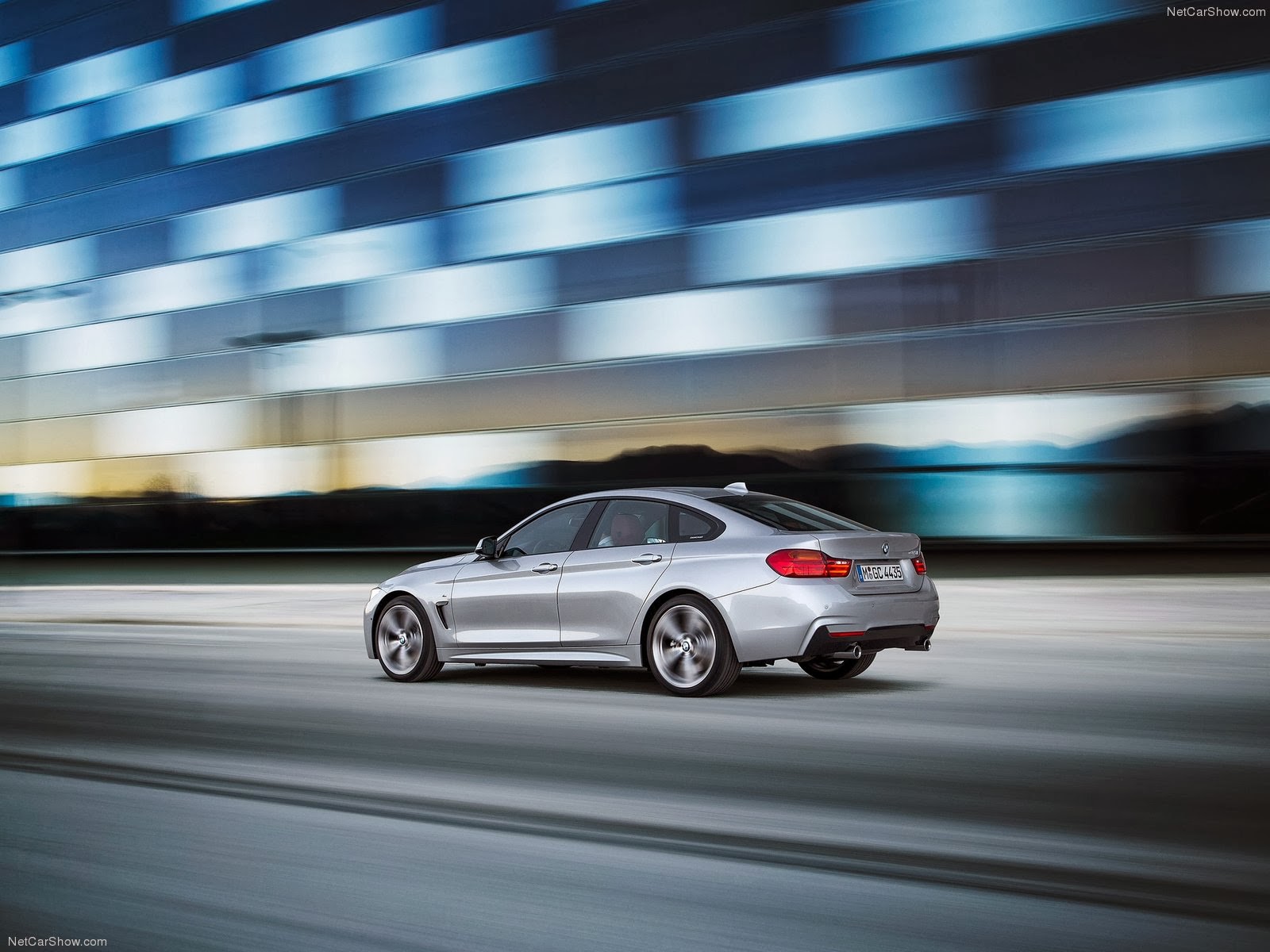
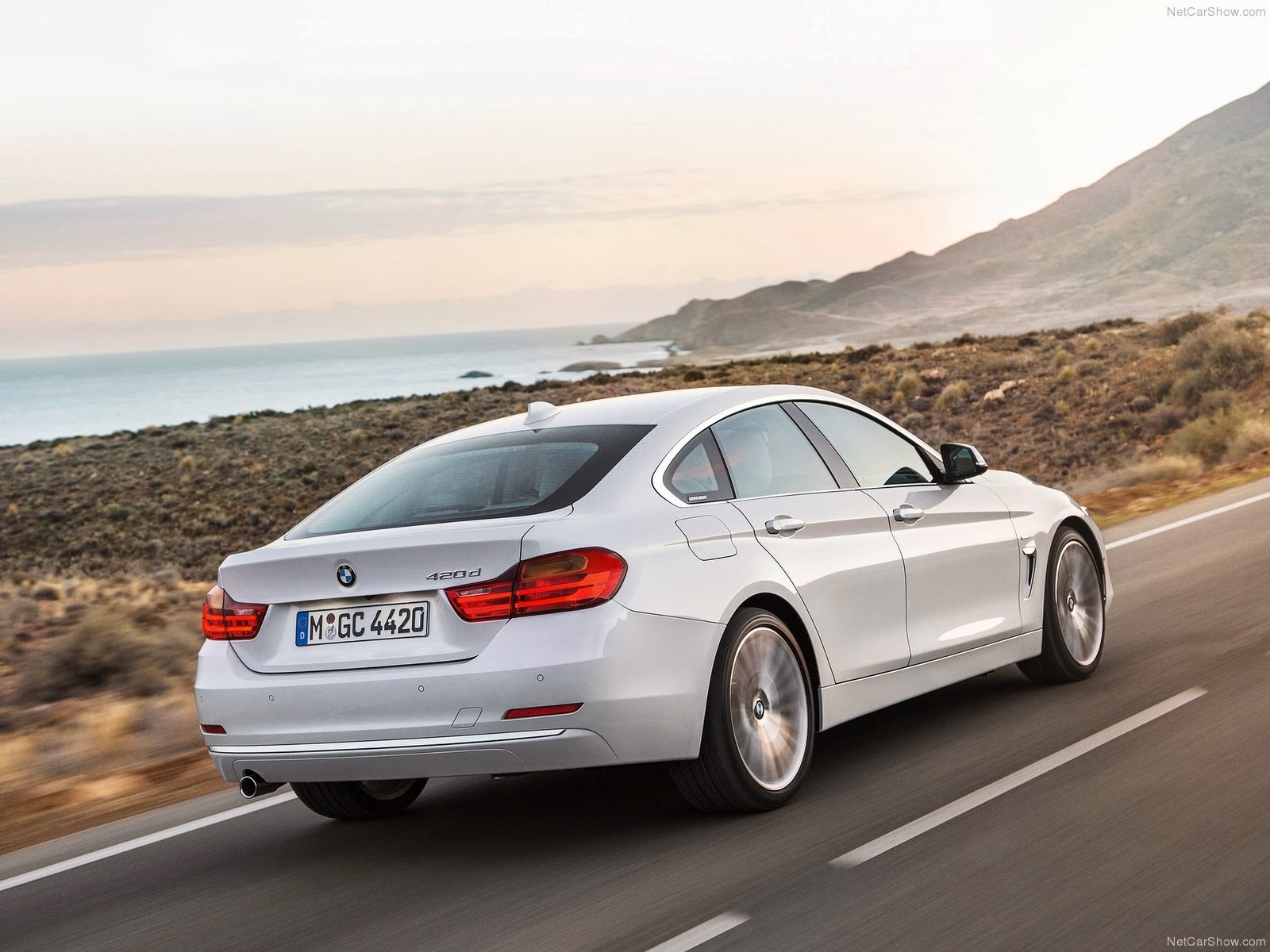
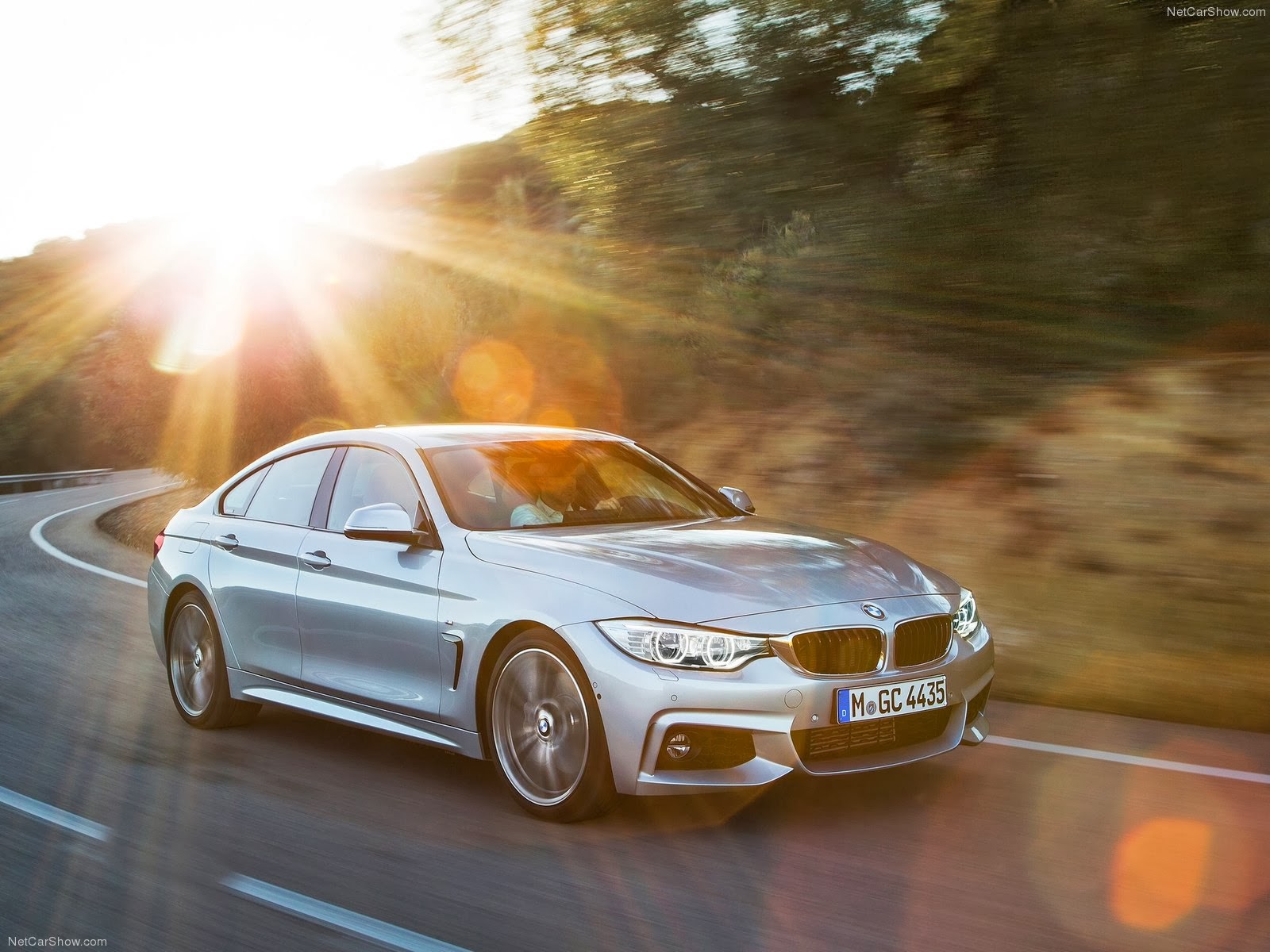
BMW proudly presents the new BMW 4-Series Gran Coupé (combined fuel consumption: 8.1-4.5 l/100 km; combined CO2 emission: 189-119 g/km), the first four-door coupé in the premium midsize class that represents a consistent extension of the model range. Following the launch of the BMW 4-Series Coupé and Convertible, the Gran Coupé is the third model to join the new BMW 4-Series, which is longer, wider and more dynamic than any of the previous midsize series due to the balanced proportions of the vehicles. The new BMW 4-Series Gran Coupé combines the sleek look of a two-door coupé with the functionality provided by four-doors and expansive spaciousness, including a wide-access luggage compartment.
New standard of elegance and extravagance in the midsize class
The BMW 4-Series Gran Coupé has exactly the same dimensions as the two-door coupé: a length of 4,638 millimeters, a width of 1,825 millimeters and a wheelbase of 2,810 millimeters. Up front, both models are identical and share the typical BMW design features like the double-kidney grille, dual round headlights and the large air intake in the front apron. However, the roof of the BMW 4-Series Gran Coupé is twelve millimeters higher, 112 mm longer and gently stretched allowing it to flow smoothly into the rear quarter panels and boot lid. The typical BMW short overhangs, the long bonnet and the set-back passenger compartment complement the design of the BMW 4-Series Gran Coupé to express perfect balance
 1/113 Wallpapers and Pictures


This extended roofline highlights the elegance and sophistication of the BMW 4-Series Gran Coupé, while setting new standards for aesthetics in the midsize class that also have decisive practical advantages. For example, there is more headroom in the interior, not to mention added comfort. The boot volume of 480 liters is 35 liters larger than that of the two-door version for more convenience in meeting the challenges of everyday driving situations with the BMW 4-Series Gran Coupé.

Dynamic and elegant concept with functional elements
When compared with a two-door coupé, the BMW 4-Series Gran Coupé offers passengers easier access when entering or leaving the vehicle thanks to the four-door configuration. The doors are frameless, having the characteristic design features of BMW midsize coupés that emphasize the elegance of the vehicle concept. The functional elegance of the 4+1 seater is highlighted by prominent round instruments with a black panel look and the free-standing flat-screen iDrive monitor. The wide-access boot opening and spacious luggage area makes loading and unloading much easier. The 40:20:40 split folding backrest of the rear seat ensures added flexibility. The maximum volume of the boot is 1,300 liters and is best-in-class when it comes to the premium four-door coupés currently offered. The boot lid is equipped as standard with an automatic opening and closing mechanism for maximum convenience, and the Smart Opener feature can be ordered to open and close the lid with a movement of the foot.

                                           More 100 Wallpapers and Pictures                                                


Wide-ranging customizing options offered by three special equipment packages, the M Sport package and the BMW Individual program
The interior of the BMW 4-Series Gran Coupé represents elegance and sophistication combined with outstanding ergonomics. All controls are configured to give the driver optimal access to them. An approach known as layering - the intelligent utilization of space through the structuring of lines and surfaces into layers - expresses the hallmark BMW driver focus. Lines from the cockpit stretch along the front doors and the B column into the rear passenger compartment. They create a sense of unity encompassing the front and back seats, as do the seamless transitions formed by the interior door panels. The shape of the rear bench seat resembles the look of two individual seats, but the upholstered "console surface" between them can also accommodate a third passenger in the middle (4+1 seater). Extraordinary material combinations and unrivalled quality of workmanship define the premium ambience on board the new BMW 4-Series Gran Coupé. The standard model variant, plus three optional equipment packages and the M Sport package, leave no wishes unfulfilled for drivers wanting a special look and feel. The BMW Individual program offered at market launch includes options for creating an exclusive vehicle with special leather interior packages, exterior colors and 19-inch light-alloy wheels.

Four and six-cylinder petrol engines, plus two four-cylinder diesel engines available at model launch
The new BMW 4-Series Gran Coupé offers a choice of five powerful, cultivated and efficient engines. The high-end is represented by the 435i's six-cylinder in-line 3.0-liter petrol engine delivering 225 kW/306 hp (fuel consumption urban/extra-urban/combined: 11.4/6.2/8.1 l/100 km; combined CO2 emission: 189 g/km). The BMW 428i Gran Coupé (fuel consumption urban/extra-urban/combined: 8.9/5.3/6.6 l/100 km; combined CO2 emission: 154 g/km)and the BMW 420i Gran Coupé (fuel consumption urban/extra-urban/combined: 8.7/5.1/6.4 l/100 km; combined CO2 emission: 149 g/km) are equipped with light and powerful four-cylinder engines that deliver 180 kW/245 hp and 135 kW/184 hp, respectively. Like all BMW diesel variants, the two four-cylinder engines offered for the BMW 4-Series Gran Coupé are known for their smoothness, torque and outstanding efficiency. The BMW 420d Gran Coupé (fuel consumption urban/extra-urban/combined: 5.8/4.1/4.7 l/100 km; combined CO2 emission: 124 g/km) delivers 135 kW/184 hp with an average fuel consumption, depending on tires, of only 4.7 to 4.9 liters per 100 kilometers (4.6 to 4.7 liters with sport automatic transmission) and sprints from 0 to 100 km/h (0 to 62 mph) in only 7.7 seconds (7.5 seconds with sport automatic transmission). The engine in the BMW 418d Gran Coupé (fuel consumption urban/extra-urban/combined: 5.4/4.0/4.5 l/100 km; combined CO2 emission: 119 g/km) has an output of 105 kW/143 hp and consumes 4.5 to 4.7 liters per 100 kilometers.
All diesel and petrol engines feature the latest BMW TwinPower Turbo technology and comply with the EU6 emissions standard. The ultramodern engines combine impressive elasticity and dynamics with very low fuel consumption and emissions.

xDrive and two Steptronic transmissions are available
At model launch, the BMW 428i Gran Coupé and 420d Gran Coupé can be optionally equipped with BMW xDrive intelligent all-wheel drive technology. (428i xDrive: fuel consumption urban/extra-urban/combined: 9.0/5.5/6.8 l/100 km; combined CO2 emission: 159 g/km; 420d xDrive: fuel consumption urban/extra-urban/combined: 6.1/4.2/4.9 l/100 km; combined CO2 emission: 129 g/km) The standard variant of the new BMW 4-Series Gran Coupé features a six-speed manual transmission, but all engines can be combined with the optional eight-speed Steptronic or eight-speed sport Steptronic transmissions, which also feature manual shifting using paddles on the steering wheel.

BMW EfficientDynamics - sporty performance, low consumption
The elegant and dynamic character of the BMW 4-Series Gran Coupé is accompanied by excellent economy and efficiency. The source of this low fuel consumption can be traced to the BMW EfficientDynamics strategy, with wide-ranging innovations for intelligent mobility. These innovations include the optimized fuel economy of the petrol and diesel engines, the lightweight construction concept and honed aerodynamics with features such as a smooth covered underbody and the use of Air Curtains and Air Breathers. Brake Energy Regeneration, the Auto Start Stop function, the gear shift indicator and ancillary components that are activated on-demand also contribute to fuel savings and reduced emissions. Automatic transmissions (Steptronic) can also reduce consumption with coasting mode, and even more is possible with ECO PRO mode.

BMW ConnectedDrive - 100 percent connectivity
The entire range of BMW ConnectedDrive options can be ordered for the BMW 4-Series Gran Coupé. Among the highlights are the Navigation System Professional, the full-color BMW Head-Up Display, Driving Assistant, the glare-free High Beam Assistant, Active Protection and the latest development stage of the Active Cruise Control with Stop & Go function. Innovative interface technology also permits easy integration of smartphones in the vehicles. This supports the use of the dynamically growing selection of apps available, for example, from Audible or Deezer, for various purposes in the vehicles.

Concept and design
The new BMW 4-Series Gran Coupé extends the model range of vehicles available in the premium midsize class. It combines the sleek look of a two-door coupé with the functionality provided by four-doors and expansive spaciousness, including a wide-access luggage compartment. The sporty and premium character of the BMW 4-Series is combined with intelligent functionality and refined elegance in the Gran Coupé. While this model shares the same length, width, wheelbase and track with the extremely dynamic two-door version, the roofline of the BMW 4-Series Gran Coupé is 112 millimeter longer and slopes gently to the rear of the vehicle. What's more, the silhouette is twelve millimeters higher to offer more headroom and comfort in the rear passenger compartment. This contributes to increased headroom on all seats and the overall feeling of interior spaciousness. At the same time, the short front and rear overhangs, the long wheelbase relative to the vehicle length, and the set-back passenger compartment are typical BMW touches that add to the perfect balance of the body design and the noble appearance of this car, which is derived from the elegant BMW 6-Series Gran Coupé.

Elegant coupé with saloon car and touring qualities
Like the two-door version, the sporty dimensions of this vehicle are a reflection of its bold and dynamic handling characteristics. The stretched roofline, four frameless doors and a wide, electrically operated boot lid offered as standard provide the functionality of a saloon car within the silhouette of a coupé. The volume of the boot is 480 liters, which is the same capacity provided by the BMW 3-Series Saloon. The back of the rear seat can be folded down in the configuration 40:20:40 as desired to increase the load capacity to 1,300 liters. The flat floor and a two-part loading strip made of stainless steel are practical convenience elements that are combined with premium materials. Thus the BMW 4-Series Gran Coupé can easily transport a pram, two golf bags or six crates of bottled water without using the folding function.
In contrast to a two-door coupé, the BMW 4-Series Gran Coupé offers passengers easier access when entering or leaving the vehicle thanks to the four-door configuration. The doors are frameless, having the characteristic design features of BMW midsize coupés. The wide-access boot lid harmonizes perfectly with the overall silhouette. When closed, the precise flow of the lid seams simulates the look of a typical coupé boot. The electric drives that help move the boot lid reflect perfection in detail. They are installed vertically and require very little space. Thus the area of the rear windscreen is much larger and provides a very good view, without limiting the space available.
At first glance, the BMW 4-Series Gran Coupé is an expression of extreme dynamics and refined elegance. With a length of 4,638 millimeters, a width of 1,825 millimeters and a wheelbase of 2,810 millimeters, the four-door variant has the same dimensions as the two-door coupé. The track dimensions of both models - 1,545 millimeters front and 1,594 millimeters rear - are identical and highlight the dynamic potential of the BMW 4-Series Gran Coupé. The silhouette of the four-door model is twelve millimeters higher than the two-door version. The stretched roofline flows gently across both rear doors and blends into the slightly raised and short rear section of the car.

Athletic, elegant and powerful from any perspective
The BMW 4-Series Gran Coupé is instantly recognizable by classic BMW design features such as the iconic kidney grille and dual round headlight clusters. The body contours are executed with precision, with multifaceted surfaces that distinguish the eye-catching look up front. Full LED dual headlights can be ordered as options to bolster the dynamic aura of the vehicle. The three-part, wide air intakes in the front apron emphasize this effect. The extreme left and right apron corners reveal vertical air channels for the so-called Air Curtains. They generate a veil of air around the front wheels thereby enhancing the aerodynamic efficiency of the BMW 4-Series Gran Coupé.
The sides of the vehicle are distinguished by a bold swage line and a subtle light-catching edge that create the impression of forward movement in the design of the BMW 4-Series Gran Coupé. Stretched lines and expressively contoured surfaces generate a dynamic interplay of light and shadows. The extremely gentle slope of the roofline stretches the appearance of the sides even more and visually strengthens the imposing presence of the BMW 4-Series Gran Coupé. The taut and smooth appearance of the side windows, with a B column finished in high-gloss black that is nearly invisible, makes a homogeneous and high-quality impression. The rear third window in the ensemble is a modern interpretation of the Hofmeister kink that is characteristic of BMW vehicles. This extended window surface allows more light into the interior and improves the overall visibility in the rear passenger compartment.
The rear of the car features clear horizontal lines that accentuate its athletic elegance. The taillights are positioned at the outer edges to receive the swage lines, thus serving as transitional design elements that join the body side panels with the rear section of the automobile. At the same time, they highlight the wide track and powerfully flared wheel arches. When viewed from the rear, the roof of the BMW 4-Series Gran Coupé is somewhat wider than that of the two-door version and thus emphasizes the noble road presence of this premium vehicle.

Stylish elegance and sportiness dominate in the interior
The interior of the BMW 4-Series Gran Coupé presents a stylish fusion of sporty allure and exclusivity. An approach known as layering - the intelligent utilization of space through the structuring of lines and surfaces into layers - expresses the hallmark BMW driver orientation without compromising the passenger experience. The stylish and functional elegance of the interior is highlighted by prominent round instruments with a black panel look and the free-standing flat-screen iDrive monitor. The cockpit and rear passenger compartment are visually joined by trim strips originating in the instrument panel and extending along the upper sections of the door panels into the rear, and embellished by dual-color window sills. The B column blends into the side panel design and includes flowing graphic effects across the entire surface. The side supports and slender head restraints in the rear seat are contoured for a modern, seemingly molded one-piece look that adds to the sporty character of the 4+1 seater.
The backrest can be folded in 40:20:40 configurations to create more luggage and stowage space as required - with a flat floor for easy loading and unloading. When the seat is completely folded down, the maximum volume capacity is 1,300 liters. If only the center segment is utilized, four people can ride comfortably while transporting long and bulky items like snowboards, skis, etc. When not folded down, this middle section provides space for two cup holders. An optional feature is the Smart Opener, which automatically opens the boot lid via gesture control - namely a foot movement underneath the rear bumper when arms are full carrying groceries, packages, etc.

Exclusive: three equipment packages, the BMW Individual program and the BMW M Sport package
The premium ambience of the BMW 4-Series Gran Coupé results from exclusive colors, high-quality and rich material combinations along with special equipment packages for a customized look. In addition to the standard equipment, which highlights the classic character of the vehicle, three equipment "lines" as well as the exclusive BMW Individual program and the M Sport package are available. These optional packages endow each BMW 4-Series Gran Coupé with a particular character and identity by embellishing the interior and exterior of the vehicle. Modern, Sport and Luxury lines offer various renditions of the following elements in contrast to the basic standard equipment: appearance and color of the kidney grille and air intakes, Air Breathers and mirror covers, side window design, front and rear apron trim, door sill finishers, side emblems and an interior center stack finished in high-gloss black.
For an extraordinary appearance, the BMW Individual program offers fine leather for the interior and instrument panel, exclusive wood trims and special door sill finishers. Four special exterior colors, in addition to the Individual program features, as well as 19-inch light-alloy wheels complete the list of options in this package.
To make the strongest dynamic statement, the M Sport package is also available at model launch with special body elements, exterior colors, light-alloy wheels, and interior variants in both cloth and leather.

Sport Line
In this optional equipment line, special body elements are highlighted in black. The subtle B column and the nine slats in the chrome-colored kidney grille have a high-gloss black finish, whereas the side window elements are finished in matt black. The air intakes in the front spoiler and the Air Breathers in high-gloss black draw attention to the aerodynamic elements of the BMW 4-Series Gran Coupé. The sporty look is enhanced even more with 18-inch or 19-inch light-alloy wheels with a dynamic double-spoke design. The rear is also distinguished by dark elements. A black trim strip and a tailpipe embellisher finished in black chrome stand for sporty dynamics. The interior, by contrast, expresses sporty flair with red accents. For example, the inner rings of the dash instruments and contrast stitching on the steering wheel are red. This character can be highlighted even further in the BMW 4-Series Gran Coupé with additional options such as Coral Red leather sport seats, red exterior mirror covers and a red instrument cluster.

Luxury Line
Bright chrome that highlights subtle accents contributes to the exceptionally elegant character of the vehicle. The 11 grille slats with chrome-colored fronts and the bright dual crossbar in the front apron's air intakes are very classy touches. The Air Breathers and high-gloss chrome window details add to the appealing look. Light-alloy wheels - 18-inch or 19-inch - with an intricate multi-spoke design reflect pure extravagance. From the rear, the BMW 4-Series Gran Coupé can be identified by the tailpipe, horizontal trim strip in the rear apron and the Luxury Line emblem all finished in high-gloss chrome.
Chrome accents also harmonize with the luxurious interior. The enclosure surrounding the audio system and air conditioning controls, as well as the circular rings highlighting the instrumentation, are eye-catching touches. Premium leather, finely crafted with precise stitching, with a choice of two upholstery variants in four classic and elegant colors such as Saddle Brown, underline the exclusivity of the Luxury Line.

Modern Line
High-quality, satin-finished aluminum exterior trim elements define the contemporary aesthetics of the Modern Line. The 11 slats in the kidney grille, the edges of the outer air intakes in the front apron, the window trim, the Air Breathers and the horizontal trim line at the rear are composed of satin-finished aluminum that stands for understated, harmonious elegance. The modern body style is complemented by optional 18-inch or 19-inch light-alloy wheels having a turbine-like appearance. The light-colored dashboard coupled with a steering wheel in Dark Oyster creates a very special feeling of luxurious space. Contrasting materials, with leather upholstery or cloth combined with leather accents in Oyster or Black, and a choice of four trim surfaces with accent strips in Pearl Gloss Chrome, add to the appeal of the interior.

BMW Individual program
At model launch, the BMW 4-Series Gran Coupé can be delivered with fine leather interiors, exquisite wood trims and a choice of wheels that address the exclusive tastes of every owner.
Upholstery options in seven colors for seating and the dash, with special contrasting stitching, are offered in this equipment package along with a leather steering wheel in Merino Black and special door sill finishers with "Individual" lettering. The Individual program also includes four exclusive exterior finishes and 19-inch light-alloy wheels that enhance the vehicle from all angles.

M Sport package
The technology, functions and extraordinary driving dynamics that distinguish every BMW automobile are also evident in the DNA of the BMW 4-Series Gran Coupé. Of course, these can be augmented with the M Sport package which is available at model launch. This equipment package is comprised of elements that emphasize street performance - for example, aerodynamic features like the large air intake up front, the diffuser insert in the rear bumper and rocker panel trim matching the color of the vehicle. The characteristic M styling of the 18-inch and 19-inch light-alloy wheels adds to the bold impression. Six exterior colors are offered in the M Sport package, including Carbon Black Metallic and Estoril Blue Metallic, which are exclusive choices for this package of options.
Inside the car, features such as M door sill finishers, an M leather steering wheel and an M driver's footrest shape the sporty yet elegant ambience. The driver and front passenger can settle into the dynamic-looking and elegant sport seats upholstered with a Hexagon/Alcantara combination with M piping and Royal Blue contrast stitching. Full leather upholstery can be ordered for even more interior refinement.
Technical features of this package include M Sport suspension and the optional M Sport brakes in contrasting blue paint finish.

Powertrain
The new BMW 4-Series Gran Coupé offers a choice of five powerful, cultivated and efficient engines. All diesel and petrol engines feature the latest BMW TwinPower Turbo technology and comply with the EU6 emissions standard. The range includes the high-end engine ‒ the six-cylinder petrol engine in the BMW 435i Gran Coupé ‒ as well as two light and powerful four-cylinder power plants in the BMW 428i Gran Coupé and in the BMW 420i Gran Coupé. In addition to these petrol engines, diesel engines with two liters of displacement are offered for the BMW 418d Gran Coupé and the BMW 420d Gran Coupé. Both of these diesel engines are remarkably dynamic, powerful and efficient when it comes to fuel consumption.
The power from the engines is delivered to the rear wheels via the precision six-speed manual transmission as standard. BMW also offers all engine variants with an eight-speed Steptronic or an eight-speed sport Steptronic transmission as options. All transmissions feature the Auto Start Stop function.
At model launch, the BMW 428i Gran Coupé and 420d Gran Coupé can be optionally equipped with BMW xDrive intelligent all-wheel drive technology.

Petrol engines with BMW TwinPower Turbo technology
The performance and torque delivered by ultramodern BMW petrol engines is due in large part to TwinPower Turbo technology. This technology includes innovative solutions such as high-precision direct injection, a turbocharger operating according to the Twin-Scroll principle, double VANOS variable camshaft timing and VALVETRONIC variable valve control. The low-friction engines are also equipped with an aluminum crankcase. This technology package is unrivalled worldwide and combines high performance with utmost efficiency.

BMW 435i Gran Coupé: six-cylinder petrol engine with bold performance, powerful torque and silken smoothness
The large-displacement, six-cylinder engine in the new BMW 4-Series Gran Coupé delivers cultivated power with high-revving characteristics and extraordinary smoothness. The 3.0-liter power plant delivers 225 kW/306 hp between 5,800 rpm and 6,000 rpm, thus contributing to the sovereign dynamics of the new Gran Coupé. Peak torque of 400 Nm (295 lb-ft) is generated as low down as 1,200 rpm and remains on tap up to 5,000 rpm. The new BMW 435i Gran Coupé sprints from 0 to 100 km/h (62 mph) in just 5.5 seconds and has an electronically limited top speed of 250 km/h (155 mph). The six-cylinder unit belies its impressive performance with extremely low fuel consumption and emissions figures. Average fuel consumption is between 8.1 and 8.3 liters per 100 kilometers, and CO2 emissions range from 189 to 193 grams per kilometer (ECE test cycle, depending on the tire format specified). In conjunction with the eight-speed Steptronic transmission, the new BMW 435i Gran Coupé is very thrifty: The combined fuel consumption is just 7.5 - 7.6 liters per 100 kilometers, while CO2 emissions are pinned to between 174 and 178 grams per kilometer. The sprint from 0 to 100 km/h takes 5.2 seconds.

BMW 428i Gran Coupé: four cylinders and the ideal balance between sportiness and efficiency
Superior performance, spirited power development, high-revving characteristics and low weight: These are the qualities of the innovative four-cylinder petrol engine in the BMW 428i Gran Coupé that ensure a perfect balance between dynamic performance and efficiency. The BMW TwinPower Turbo engine combines high-revving characteristics and high-performance output with low fuel consumption and reduced emissions. The 2.0-liter engine delivers a maximum power output of 180 kW/245 hp, which is reached between 5,000 and 6,500 rpm. Peak torque of 350 Nm (approx. 258 lb-ft) is generated between 1,250 rpm and 4,800 rpm. The new BMW 428i Gran Coupé sprints from 0 to 100 km/h in just 6.1 (6.1) seconds and has an electronically limited top speed of 250 km/h (155 mph). Average fuel consumption is between 6.6 and 6.7 liters per 100 kilometers, and CO2 emissions range from 154 to 156 grams per kilometer (ECE test cycle, depending on the tire format specified). When equipped with the eight-speed Steptronic transmission, the BMW 428i Gran Coupé is even more frugal, 
consuming only 6.3 to 6.4 liters per 100 kilometers at CO2 emission levels of 147 to 149 grams.

BMW 420i Gran Coupé: standard petrol engine with high performance and low consumption
Like the BMW 428i, the engine in the BMW 420i Gran Coupé is a low-friction 2.0-liter power plant. This four-cylinder petrol engine generates maximum output of 135 kW/184 hp at 5,000 rpm and peak torque of 270 Nm (approx. 199 lb-ft) at 1,250 rpm. Thus the new BMW 420i Gran Coupé sprints from 0 to 100 km/h in just 7.5 (7.6) seconds and has an electronically limited top speed of 236 km/h (approx. 146 mph). Average fuel consumption is between 6.4 and 6.6 liters per 100 kilometers, and CO2 emissions range from 149 to 153 grams per kilometer (ECE test cycle, depending on the tire format specified) - even better results are achieved with the eight-speed Steptronic transmission: 6.1 to 6.3 liters per 100 kilometers and 142 to 146 grams per kilometer.

Diesel engines with BMW TwinPower Turbo technology
All the diesel engines available for the new BMW 4-Series Gran Coupé feature ultramodern BMW TwinPower Turbo technology. The latest-generation common rail direct injection technology, turbochargers with variable turbine geometry, precise solenoid valve injectors and an aluminum crankcase ensure impressive punch and smoothness, combined with outstanding efficiency. In their design and quality, these BMW diesel engines set the latest standards in engine technology and development.

BMW 420d Gran Coupé: four-cylinder diesel with high output and smooth performance
The new BMW 420d Grand Coupé with the latest-generation four-cylinder diesel engine is impressive with its imposing torque, exceptional smoothness and outstanding efficiency. With maximum output of 135 kW/184 hp at 4,000 rpm and peak torque reaching 380 Nm (approx. 280 lb-ft) between 1,750 and 2,750 rpm, the new BMW 420d Gran Coupé displays an extremely dynamic turn of pace. The sprint from 0 to 100 km/h takes just 7.7 seconds (automatic transmission: 7.5 seconds), and the top speed of this agile diesel engine is clocked at 236 km/h (approx. 146 mph). Combined fuel consumption (ECE test cycle) of between 4.7 and 4.9 liters per 100 kilometers and CO2 emissions of 124 - 128 grams per kilometer represent the compelling economy delivered by the BMW 420d Gran Coupé. The optional eight-speed Steptronic transmission adds more comfort and convenience and reduces consumption even further: 4.6 to 4.7 liters per 100 kilometers and CO2 emissions of 121 - 124 grams per kilometer.

BMW 418d Gran Coupé: a diesel that is agile and very economical
High performance and torque characterize this basic standard diesel, which shares the same design with the 2.0-liter engine that powers the BMW 420d. In the BMW 418d Gran Coupé, this diesel engine generates maximum output of 105 kW/143 hp at 4,000 rpm and peak torque of 320 Nm (approx. 263 lb-ft) between 1,750 rpm and 2,500 rpm. The sprint from 0 to 100 km/h takes just 9.2 seconds (automatic transmission: 9.1 seconds), and even with a top speed of 213 km/h (approx. 132 mph) the BMW 418d Gran Coupé is very thrifty when it comes to fuel - equipped with manual or automatic (Steptronic) transmissions, the engine consumes an average of 4.5 to 4.7 liters per 100 kilometers (depending on tire format). The corresponding CO2 emissions are between 119 and 
124 grams per kilometer.

BMW xDrive: intelligent all-wheel drive for two engine variants
At model launch, the BMW 428i Gran Coupé and 420d Gran Coupé can be optionally equipped with BMW xDrive intelligent all-wheel drive technology as an alternative to classic rear-wheel drive. In addition to the typical all-wheel drive benefits, such as optimal transmission of engine power to the road, outstanding traction and maximum safety, BMW xDrive reduces understeering and oversteering in curves and thus contributes to agile and precision handling, especially when entering into and accelerating out of curves. The all-wheel system even compensates for sudden load shifts with ease - drivers will immediately feel the dynamic qualities of the new BMW 4-Series Gran Coupé.

New engine variants in summer 2014: BMW 435d xDrive Gran Coupé, BMW 430d Gran Coupé and more BMW xDrive options
For 2014, BMW is extending its range of engines for the new BMW 4-Series Gran Coupé by adding two powerful diesels to the lineup. The top diesel variant is the six-cylinder engine in the BMW 435d xDrive Gran Coupé, delivering 230 kW/313 hp and maximum torque of 630 Nm (approx. 465 lb-ft). The eight-speed Steptronic transmission and intelligent xDrive all-wheel drive are standard equipment on this model and are ideally suited for harnessing the performance and enormous power output of this engine to ensure smooth and comfortable mobility. The six-cylinder engine in the BMW 430d Gran Coupé has an output of 190 kW/258 hp and develops a maximum torque of 560 Nm (approx. 413 lb-ft). Here, too, gear changes are the work of the eight-speed Steptronic transmission. BMW xDrive all-wheel drive can be ordered as an option. In the summer of 2014, this will also apply to the BMW 435i Gran Coupé and 420i Gran Coupé.

Six-speed manual transmission is standard equipment
The six-speed manual transmission easily handles sporty driving styles as well as relaxed cruising. Smooth and precise shifting, along with optimal gear ratios, is typical of BMW automobiles and adds to the joy of driving the BMW 4-Series Gran Coupé. What's more, the low-friction design of the transmission reduces fuel consumption.

Eight-speed Steptronic or eight-speed sport Steptronic as options
Fast gear changes and outstanding shift comfort are qualities delivered by the eight-speed Steptronic transmission. Extra shift phases keep increases in rpm small between gear changes, and that contributes to optimal transmission of engine power in every driving situation. Numerous technological innovations and a remarkably high degree of internal efficiency ensure that fuel consumption and emissions do not rise, even in comparison with a manual transmission. In combination with petrol engines, these eight-speed Steptronic transmissions reduce emissions even more. The intelligent management and control technology also results in extremely short shifting and response times, along with direct gear engagement.
Also available for the new BMW 4-Series Gran Coupé is the eight-speed sport Steptronic transmission for even more dynamic performance. This optional transmission is aimed at drivers who prefer a sporty, "hands-on" experience - they can rely on automatic shifting or manually change gears themselves by using shift paddles on the steering wheel. Normal Mode and Sport Mode are selected with the Driving Experience Control on the center console.

Driving dynamics / BMW EfficientDynamics
The new BMW 4-Series Gran Coupé owes a perfect balance between supreme driving dynamics and outstanding comfort first and foremost to its finely tuned suspension technology. Moreover, a weight-optimized and exceptionally stiff body structure ensures that the new four-door model variant also fulfils the highest demands in terms of precision and agility, hence offering a brand-typical, active driving experience.
Elaborate suspension technology for the highest degree of comfort, typical BMW handling characteristics, steering and driving precision
Rear-wheel drive, steering free from drivetrain influences and well-balanced 50:50 axle load distribution create the ideal preconditions for dynamic performance, excellent directional stability and agile handling characteristics. A low center of gravity, a meticulously tuned suspension setup and an intelligent lightweight construction concept result in a first-class overall package that combines seemingly contradictory qualities such as maximum dynamics and outstanding riding comfort in a unique way.

The BMW 4-Series Coupé provides the basis for sporting performance
The suspension of the new BMW 4-Series Gran Coupé is modeled on that of the two-door model variant and has the corresponding dimensions. The wheelbase measures 2,810 millimeters, the track width 1,545 millimeters at the front and 1,594 millimeters at the rear (418d: 1,557/1,605 millimeters front/rear; xDrive variants 1,544/1,590 millimeters front/rear). Whilst the axle and elasto kinematics correspond to that of the BMW 4-Series Coupé, suspension and damping were aligned exclusively to the four-door version.
Lastly, specific car body reinforcement measures and an innovative strut concept within the front and rear sections of the vehicle help to enhance steering precision and response. Nevertheless, the four-door coupé is only marginally heavier than the two-door variant and even lighter than its competitors. Consequently, the new BMW 4-Series Gran Coupé is characterized by supreme driving dynamics, agile handling characteristics and a high level of precision. Notwithstanding this, riding comfort does not suffer in any way, so the dynamic four-door car presents itself as a vehicle that is completely suitable for everyday use.

Aluminum double-joint spring-strut axle at the front
The front axle of the new BMW 4-Series Gran Coupé is based on the tried and tested double-joint spring-strut aluminum construction, which combines maximum stiffness with minimum weight and significantly reduces unsprung masses. Furthermore, a torsion bar located between the front axle support and the sill creates an overall stiffer connection between the front wheels and the vehicle. Models with BMW xDrive all-wheel drive technology feature a special combination comprising a load-bearing strut and transverse brace. Moreover, a further strut connecting the suspension domes and the bulkhead significantly enhances the stiffness of the front end. Therefore, the new BMW 4-Series Gran Coupé responds very directly to the driver's steering inputs, resulting in sporty and agile handling and allowing the car to corner effortlessly and with the highest degree of precision.

All-rounder: five-arm rear axle for comfort and active driving
The rear axle of the new BMW 4-Series Gran Coupé plays a critical role in boosting the car's dynamic ability and motoring comfort. The proven five-arm concept, extra-wide mounts and supports on the wheel carriers for track and camber, slightly repositioned pivot points, ultra-stiff control arms and axle subframes, and the use of thrust arms to connect the suspension with the body all provide an excellent basis for an extremely sporty overall set-up combined with excellent comfort characteristics. On models with a sunroof, additional torsion bars ensure increased body stiffness at the rear. As a result, the rear axle guarantees precise wheel guidance, maximum directional stability and exemplary comfort characteristics.

Servotronic as standard, variable sports steering as an option
The new BMW 4-Series Gran Coupé features as standard EPS Electric Power Steering including a Servotronic function. The system provides speed-sensitive power assistance and the clearly defined mapping results in sharper steering feel and feedback. The new BMW 4-Series Gran Coupé can be equipped with variable sports steering as an option. This uses different steering ratios depending on the amount of lock applied. Only a small amount of steering effort is required for maneuvering, for example, while unbeatable tracking and straightline stability at high speeds are guaranteed.

High-performance and lightweight brake system
The new BMW 4-Series Gran Coupé comes equipped with powerful swing-caliper or fixed-caliper brakes and large, inner-vented brake discs. The calipers on the front axle are made of aluminum. As well as boasting low unsprung masses, the brakes also stand out with their superior heat tolerance, excellent wet braking performance, ease of use and excellent feel. A brake pad wear indicator and the Brake Drying function are standard on all models.

Intelligent lightweight construction: reduced weight, maximum stability
The weight optimization of all components significantly influences the dynamic performance of the new BMW 4-Series Gran Coupé. Intelligent lightweight design, a complex bodywork construction and the innovative strut concept all provide a level of body stiffness that is on par with that of the two-door model variant. This is why the four-door Gran Coupé impresses with unmatched levels of agility and precision. The use of high-strength and extra-high-strength multi-phase steel as well as tailored blanks - customized precision components for specific applications - maximizes the degree of stability at an optimized weight. Crucial, stiffness-enhancing components are made of micro-alloyed steel. As a result, the BMW 4-Series Gran Coupé features an extremely torsion resistant body that matches that of the two-door model variant.

Aerodynamics: clever detail solutions for reducing consumption
The reduction of air resistance enhances driving dynamics and reduces consumption. Optimization measures on the front apron and at the rear as well as the streamlined, smooth-surfaced underbody help the new BMW 4-Series Gran Coupé achieve a remarkable aerodynamic drag coefficient (Cd) of 0.274. For example, the BMW Air Curtains in the front apron generate a veil of air that reduces turbulence - and therefore drag - around the front wheels. In order to further optimize driving dynamics, the new BMW 4-Series Gran Coupé features aerodynamically designed wheel arches and air lips positioned in front of them. The Air Breathers positioned rearwards of the front wheel arches divert some of the air flowing through the wheel arches, thereby reducing air resistance.

Adaptive suspension, M Sport suspension and M Sport brakes
An M Sport suspension with a firmer spring/damper set-up and more robust stabilizers for the front and rear axles is available as an option for the new BMW 4-Series Gran Coupé, and can also be ordered separately from the M Sport package. 18-inch or 19-inch M light alloys are also included in this particular case. Alternatively, customers may prefer to specify adaptive suspension - with its focused sporting set-up and electronically controlled dampers - which adjusts the damper mapping to the road surface and driving situation at hand. Moreover, BMW offers an extra-light M Sport brake system for the new Gran Coupé. The team of aluminum fixed calipers (four-piston at the front, two-piston at the rear) and generously sized discs provide ideal preconditions for very short stopping distances.

Sportier, more comfortable or more efficient at the push of a button
In addition to superior driving dynamics, the new BMW 4-Series Gran Coupé convinces with a high level of motoring comfort. Using the ECO PRO mode, the driver can change the vehicle's overall characteristic according to each driving situation or personal preference to either a sporty or comfortable setting. Accelerator pedal progression, engine response, power steering characteristics and response thresholds of DSC Dynamic Stability Control are influenced by this. The system also interacts with the Steptronic transmission and the optional Dynamic Damper Control. Drivers can select their desired mode - ECO PRO, COMFORT, SPORT or even SPORT+ when they opted for at least one of the following options: 8-speed sport Steptronic transmission, M Sport package, Sport Line, adaptive M suspension or variable sports steering. Each of these predefined set-ups activates different settings for the relevant powertrain and suspension components.

BMW EfficientDynamics: better performance, better fuel economy
Impressive performance coupled with exemplary efficiency is based on the BMW EfficientDynamics development strategy, the results of which are implemented in almost all areas on the BMW 4-Series Gran Coupé. The optimized fuel economy of the petrol and diesel engines, transmissions delivering a high level of efficiency, the intelligent lightweight construction concept, honed aerodynamics and other efficiency-enhancing technologies incorporated into the new BMW 4-Series Gran Coupé all help to optimize driving dynamics, whilst at the same time reducing consumption and emissions.

Package of measures to consistently reduce emissions and increase the pleasure of driving
The new BMW 4-Series Gran Coupé features as standard an Auto Start Stop function to bring about additional economy advantages. Brake Energy Regeneration, which is also a standard feature, ensures that the generation of electric current for the onboard electrical systems concentrates on the overrun and braking phases. ECO PRO mode in particular helps the driver of the new BMW 4-Series Gran Coupé to achieve the best possible fuel efficiency. ECO PRO influences the engine control unit and the characteristic curve of the accelerator pedal. In addition, it contributes to intelligent energy and climate management. The driver is also provided with tips on how to reduce energy consumption even further for the best possible motoring efficiency.
In conjunction with the Steptronic transmission, the new BMW 4-Series Gran Coupé also features a coasting mode. At speeds of between 50 and 160 km/h (31 and 99 mph), in ECO PRO mode, the drivetrain is disconnected as soon as the driver lifts his/her foot from the accelerator pedal. As a result, the BMW 4-Series Gran Coupé vehicle is able to 'sail' without engine power, thereby also achieving maximum fuel efficiency. In conjunction with the optional Navigation System Professional, the driver is supported, if desired, by the anticipation assistant. This system provides timely information on the road ahead at an early stage and takes into account speed limits, bends in the road, built up areas and roundabouts. On the basis of this data, the system can give the driver tips on fuel-efficient driving and adjust the shift program of the automatic transmission accordingly.
The ancillary units are also incorporated into the intelligent energy management system of the new BMW 4-Series Gran Coupé. Examples include the demand-controlled coolant pump, the map-controlled oil pump as well as electromechanical power steering, whose electric motor only uses energy when power steering is required. The same is true for the disengageable air-conditioning compressor which reduces the system's power loss to a minimum.

Intelligent lightweight construction reduces consumption and CO2 emissions
Systematic lightweight construction plays a major part in increasing efficiency and agility. This concept is applied in all areas of development and comprises all components. The targeted utilization of plastics, state-of-the-art composites and the increased deployment of aluminum components in the manufacture of engines and suspensions have helped reduce the weight of the corresponding assembly groups. All these measures have a very positive effect on the BMW 4-Series Gran Coupé's driving dynamics.

BMW ConnectedDrive
The networking of driver, vehicle and the outside world with new assistance systems and information and entertainment features is increasingly enhancing safety and comfort within the vehicle. BMW was early in recognizing the significance of networking and began integrating the digital world in its cars many years ago. The BMW ConnectedDrive systems offered in the BMW 4-Series Gran Coupé either as standard or as an optional extra underline the technological leadership. The extraordinarily high level of development in mobile automotive communication is reflected in the fact that even after purchasing a BMW, customers can, for a limited period of time, flexibly order and subscribe to a wide range of technologies and services.

Navigation System Professional: operation with touch controller
The latest generation of the Navigation System Professional has a significantly greater breadth of functionality and a high-resolution, contrast-rich, color display. The graphics of the previous user interface have been completely revised and the navigation system's maps now have 3D elements. The central Control Display is operated in the familiar way using the ergonomically perfectly positioned iDrive touch controller in the center console, which now has an integral new, touch-sensitive surface and proximity sensor technology for even more convenient use. Users can use their finger to write characters or to enter destinations in the navigation system. They can now choose between using their handwriting or conventionally entering the destinations by rotating and pressing the controller.

Head-Up Display: full-color, high-resolution
In the BMW 4-Series Gran Coupé, all information relevant to the driver is presented by the Head-Up Display directly in the driver's line of vision. The information from the assistance systems, the navigation system or information pertaining to speed is projected onto the windscreen in a particularly brilliant resolution using the full color spectrum. The wide variety of driver assistance systems now available brings the amount of information that can be shown in the Head-Up Display to a whole new level.

Real Time Traffic Information: the smart way to avoid congestion
The quality of traffic management depends on the quality and currentness of traffic data available. The optional RTTI (Real Time Traffic Information) system from BMW transmits data fast and accurately via the mobile phone network. A SIM card integrated in the vehicle receives traffic data in real time and then calculates routes or detours instantly. RTTI covers motorways and dual carriageways, as well as country roads and main and side roads in urban areas. Data is additionally obtained from local authority traffic management systems to provide precise information on traffic density.

Driving Assistant warns the driver of potential collisions - including those involving pedestrians
The Driving Assistant Plus uses intelligently networked camera-based assistant systems and image processing to detect any people or vehicles within its field of vision. The movements of pedestrians are difficult to anticipate - they stop or suddenly change direction. Therefore, they impose much higher demands on the detection capabilities of assistant systems than vehicles driving ahead. When the system recognizes a looming risk of collision, it produces an acute audible warning and a visual signal appears in the instrument cluster or the Head-Up Display to alert the driver that he or she is drawing too close. The system ideally avoids a collision or, should the worst come to the worst, significantly reduces the consequences of an impact.

Active Cruise Control with Stop & Go function: a system of many talents
More active safety and more comfort are provided by the latest version of BMW's Active Cruise Control with Stop & Go function (ACC Stop&Go). It uses the data provided by the full-range radar sensors, continuously measures the proximity of the vehicle ahead and warns the BMW driver if necessary. Active Cruise Control with automatic distance control is now available at speeds between 30 km/h and 210 km/h (approx. 18 and 130 mph).
Lane Change and Lane Departure Warning systems use sensors and camera monitoring
Lane Change Warning and Lane Departure Warning are convenience and safety-enhancing assistance systems. These systems employ radar sensors and use the data from the front camera to alert drivers to potential collision risks when changing lanes or if they veer out of lane unintentionally and also issue a warning when driving too close to the vehicle ahead. The Lane Departure Warning system is only available as part of the Driving Assistant option.

Speed Limit Info: always up to date
In conjunction with the Navigation System Professional and the Navigation System Business, Speed Limit Info helps to keep the driver informed of the speed limit for the current stretch of road. The front-mounted camera ensures that additional signs or variable overhead gantry signs are taken into account. In addition, the system is able to reliably identify and react to temporary speed limits. When the window wipers are active, the system also detects signs that are valid in wet conditions only. In conjunction with the exact onboard time, speed limits are presented which are only in force at certain times of day or night.

Improved sight at night: full LED headlights with glare-free High Beam Assistant
The bright white light emitted by full LED headlights illuminates the road ahead with an exceptional intensity. With high beam activated, the High Beam Assistant partially masks the headlights as required in order to eliminate the danger of dazzling vehicles as they approach. The High Beam Assistant can also adapt to the traffic situation by switching to low beam on one or both sides. In conjunction with the front camera, the system reliably detects well lit stretches of road and switches to low beam when passing through cities, for example. The LED headlights with glare-free High Beam Assistant significantly increase the usage of high beam and therefore provide for better sight and increased safety when driving at night. When full LED headlights are fitted, the optional fog lights are also implemented in LED technology, which further accentuates the premium character of the car's features and equipment.

Superb overview and convenient parking
In addition to the rear view camera and PDC Park Distance Control, customers can also opt for the Surround View function with Side View and TopView, which provides a bird's eye view of the BMW 4-Series Gran Coupé and the area around it, enabling the driver to carry out precise maneuvers in tight spaces. If the car is moving at under 20 km/h (approx. 12 mph), the Side View function can additionally be activated to allow the driver to keep an eye on cross traffic. Convenience is further enhanced by the BMW Parking Assistant system which is able to maneuver the car into parking spaces parallel to the direction of travel. Ultrasound sensors detect possible parking spaces while driving by and the system perfectly maneuvers the car into the parking spot if desired. All the driver has to do is to change between the forward and reverse gear, use the accelerator and the brake pedal, respectively. This way he or she can fully focus on the parking process.

Active Protection: increased safety in all situations
The Active Protection safety package with extended protection measures and the Emergency Call function with automatic vehicle location help to mitigate the consequences of an accident, should the worst come to the worst. Active Protection is activated shortly after the journey begins, ready to pull the driver and front passenger belts tight and close the side windows if the car enters a critical pre-crash scenario. If the system detects an impending collision and senses that a crash is unavoidable, the car will be decelerated automatically and held at a standstill with its brakes locked. This significantly reduces the likelihood of - or entirely forestalls - a second collision. The Active Protection safety package is now even more extensive thanks to the addition of the Attentiveness Assistant. The system's electronics analyze driving behavior on the basis of various onboard signals. If the system detects an increased frequency in the tell-tale signs of fatigue build-up, the Control Display prompts the driver to take a break by displaying a coffee cup symbol.

Services and apps: innovative services and infotainment in its purest form
Due to the ever-increasing popularity of smartphones and other digital devices, Internet, apps and digital services have been an integral of everyday life for some time now. BMW ConnectedDrive offers high-performance interface technology and provides top-of-the-range infotainment and entertainment capability that enables the driver and passengers to make extensive use of external mobile phones and music players. Through the optional ConnectedDrive Services, the world of apps can be integrated into the vehicle. Browser-based BMW online applications are loaded directly into the vehicle via an embedded onboard SIM card. These applications put at the driver's disposal online services such as weather, news or office functions. Smartphone apps allow in-car use of innovative services like Audible, Aupeo!, Deezer, Twitter or Facebook.
The latest-generation Navigation System Professional features a full speech recognition function and an optimized voice control system to complete the portfolio of office functions offered by BMW ConnectedDrive. The full speech recognition system enables drivers to dictate text freely and compose short text-based messages by voice. In addition, Internet-based services, as well as calendar entries and text-based messages, can still be viewed in the Control Display of the iDrive operating system and read out via the Text to Speech function.